DualCareOS
Upstream care. Human-led. AI-assisted.
An EHR built around the full care circle — the patient and the people supporting them — and designed for the shift from touchpoint-based reimbursement to outcome-based care. DualCareOS surfaces upstream signals in the data so care teams can intervene before small problems become hospitalizations. AI handles the pattern recognition. Your team makes the call.
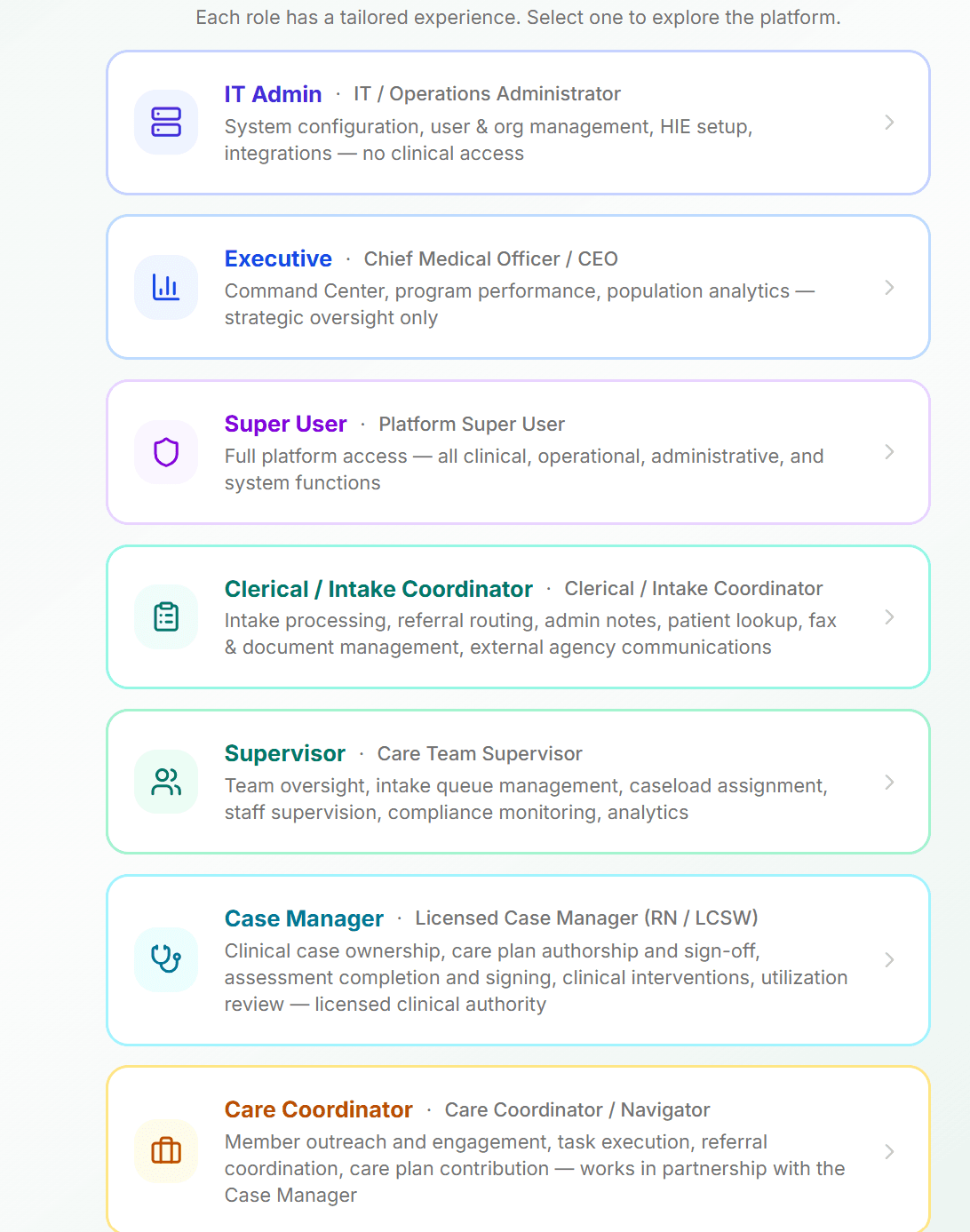
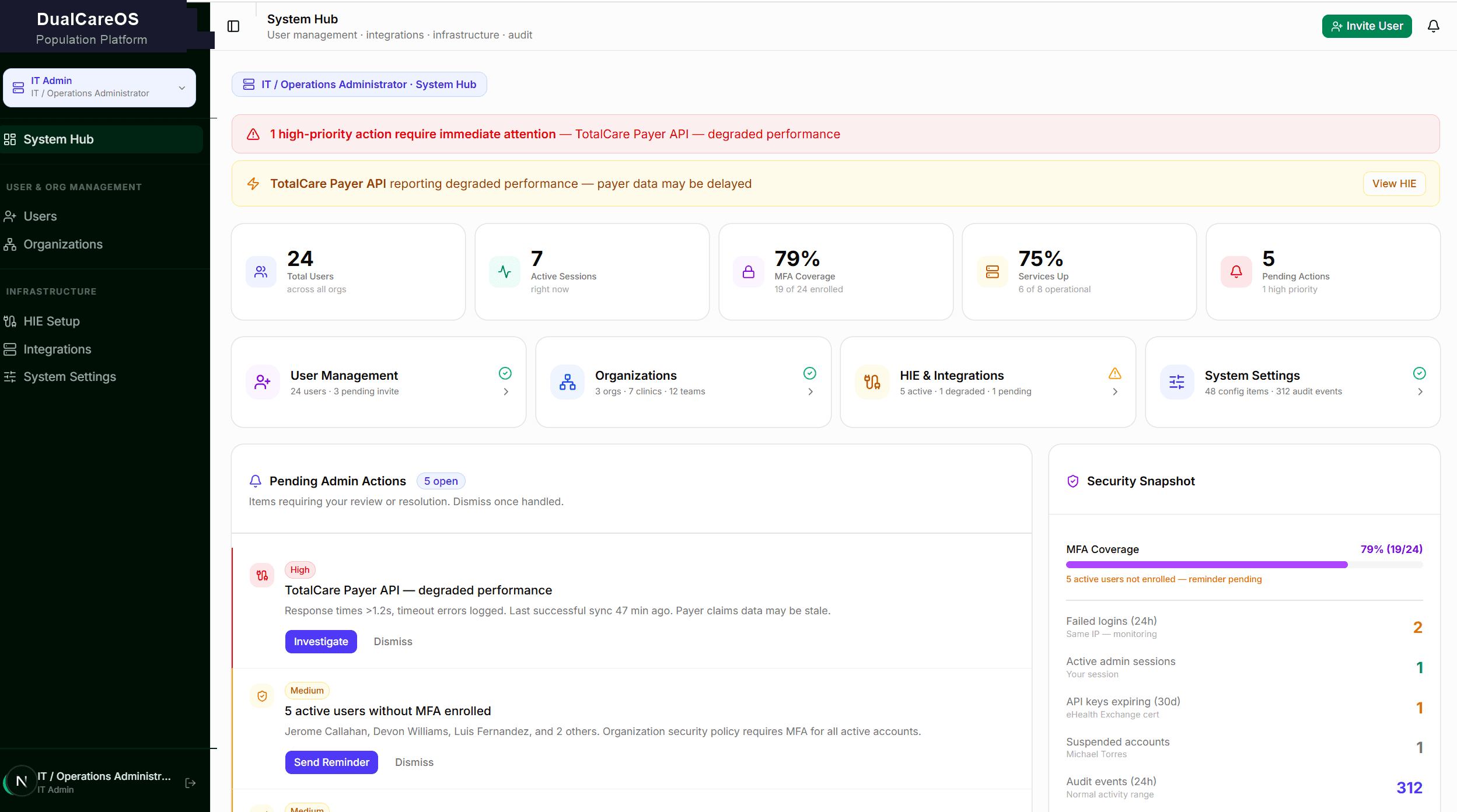
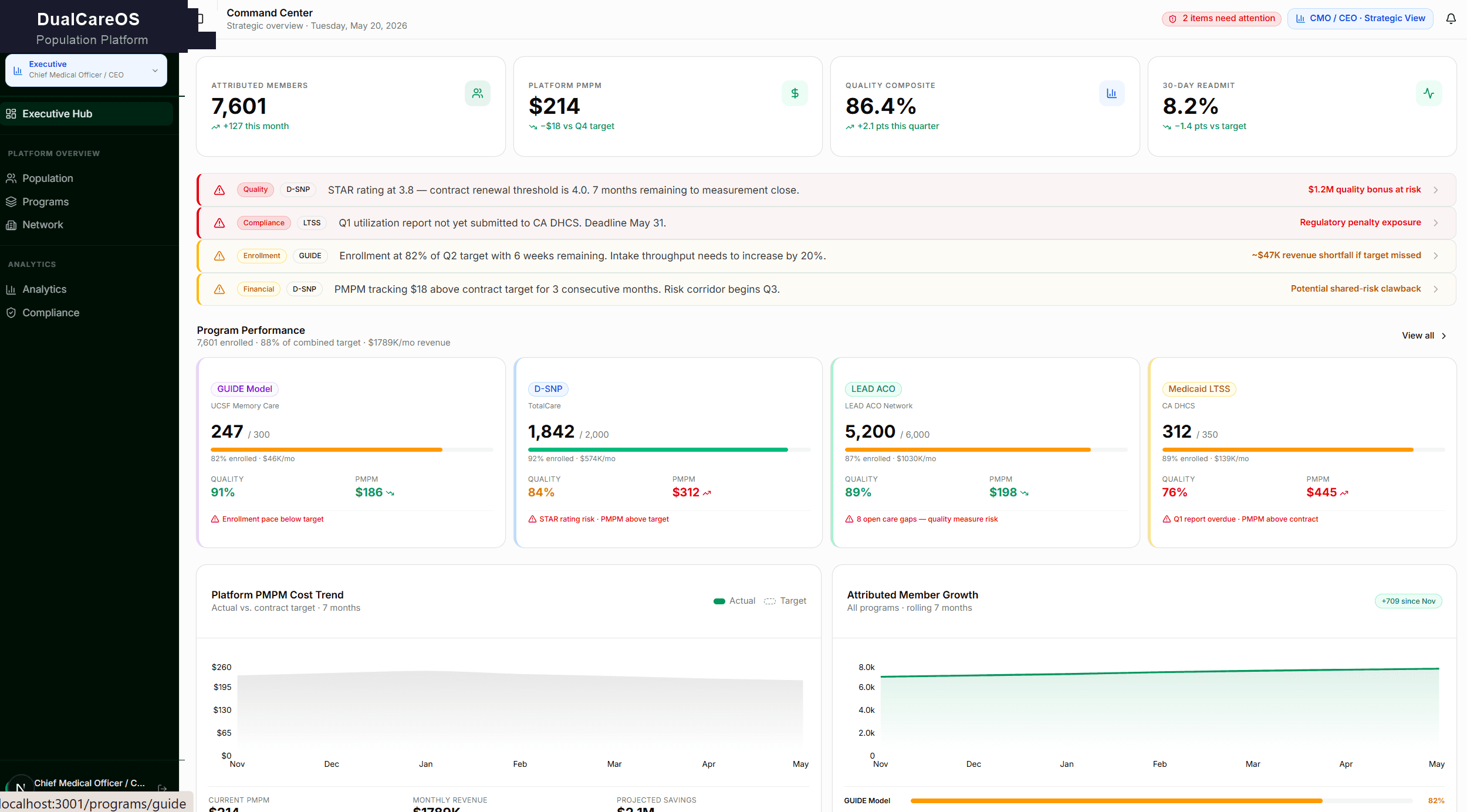
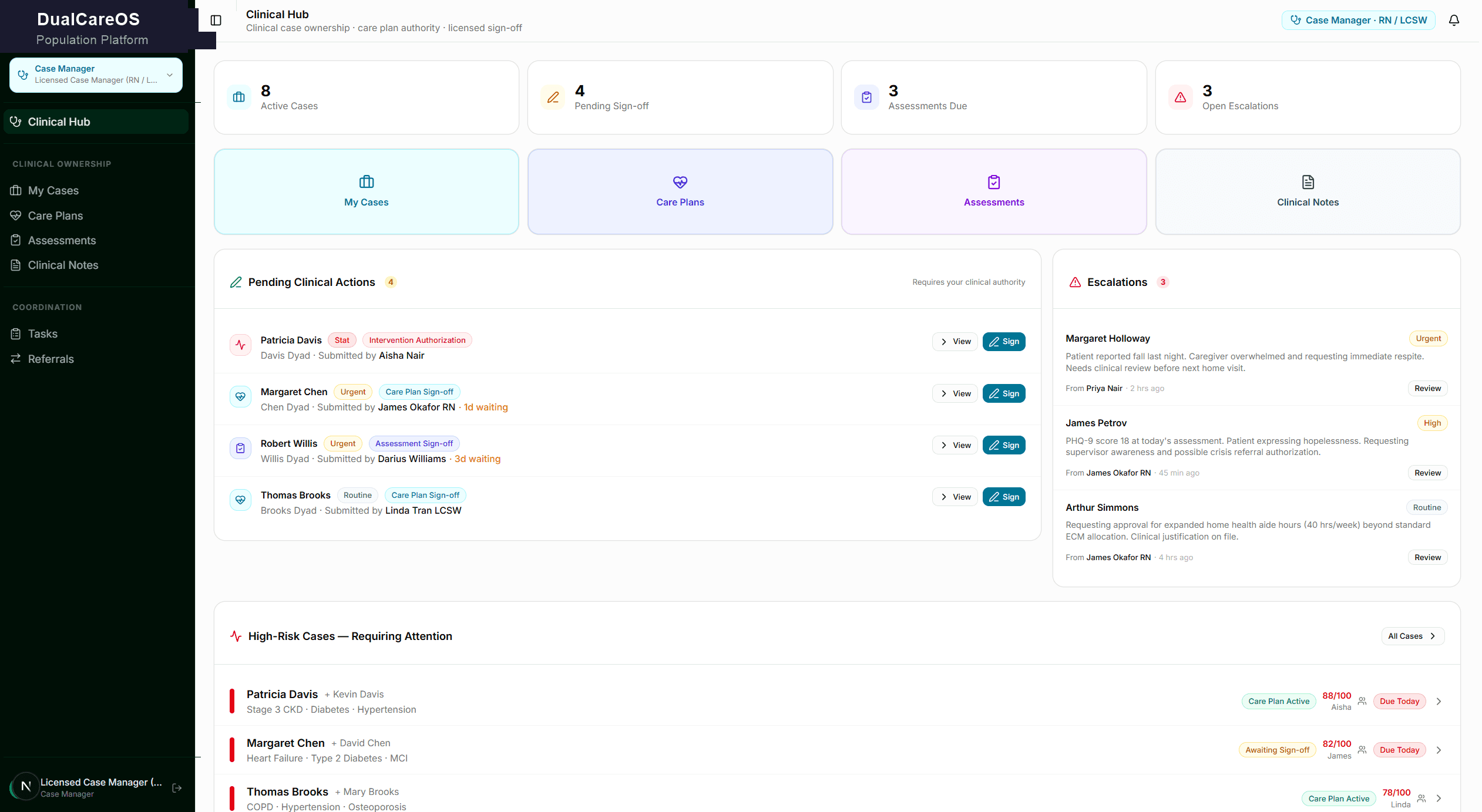
Live Platform Preview
Built for outcomes, not touchpoints.
Every capability in DualCareOS is designed to move care upstream — catching the signals that lead to avoidable hospitalizations, medication gaps, and missed appointments before they become events.
Upstream Care Model
Built around the full care circle — the patient and the people supporting them. Shared records, coordinated care plans, and a single source of truth across family caregivers, care navigators, and the clinical team.
AI-Assisted Risk Signals
DualCareOS watches the stream of care data — missed appointments, medication gaps, assessment trends, caregiver burden, social risk — and surfaces upstream signals before small issues become hospitalizations. Clinicians and care teams make every decision.
Clinical & SDOH Assessments
PHQ-9, caregiver burden, brief risk indicators, SDOH screenings, and custom instruments embedded directly in the care workflow. Scores feed the risk model and shape the care plan — not just filed and forgotten.
Phase-Based Care Journeys
Structured workflows from referral through assessment, care planning, and ongoing follow-up — with automated task generation, handoffs, and reminders built into every phase of the journey.
Outcomes Analytics
Dashboards built for value-based care — avoidable ED visits averted, 30-day readmissions, medication and appointment adherence, caregiver burden trends, and program ROI. Measures what payers now reward.
FHIR R4 Interoperability
FHIR R4-native from day one — ready to exchange data with EHRs, payers, labs, and health information exchanges. Standards-first architecture, not a standards retrofit.
The Shift
CMS is paying for outcomes. The market is moving upstream.
Health plans, care management organizations, MSOs, and community-based orgs are being asked to do more than document encounters. They're being measured on whether they can prevent them — reducing avoidable hospitalizations, closing medication gaps, intervening earlier, and improving outcomes for complex populations.
That means the signal that matters isn't the visit — it's what happens between visits. Missed appointments. Medication gaps. Rising caregiver burden. Social risk. Early clinical change. The system that catches those signals is the system that keeps patients out of the hospital.
DualCareOS was built for that reality. The patient and the people who care for them in a single record. AI watching the stream for upstream signals. Clinicians and care teams in the driver's seat — every alert, every intervention, every decision made by a human with the context and authority to make it.
Platform Capabilities
How the AI Works
AI handles the pattern. Humans make the call.
The system watches the stream
Appointments, medication fills, assessment scores, social indicators, caregiver burden, lab results, encounter notes. The data care teams already generate — now actually read in real time.
AI surfaces the signal
Patterns correlated with poor outcomes — rising burden, adherence drops, deterioration trends, no-show risk — surface as prioritized signals on the care team's work queue, with the context behind the trigger.
Clinicians and care teams decide
Every AI-generated signal routes to a human with the authority and context to act — dismiss, outreach, escalate, schedule, document. The clinical judgment stays with the clinician. The model learns from the outcome.
Enterprise-grade engineering.
DualCareOS is built on a modern React and TypeScript stack with Medplum as the FHIR backend, Supabase for analytics data, Mantine UI, and an AI layer powered by modern LLM providers — architected for healthcare-grade reliability, security, and the clinician trust that AI in healthcare demands.
Built for the shift the market is demanding.
If your organization is being measured on outcomes — avoidable hospitalizations, adherence, readmissions, population health — let's talk about what DualCareOS can do for the work ahead.
Talk to the Team